12 cheapest country that you can travel only with 1000rs.
TOP 12- The Weakest World Currencies in May 2021 that you can travel only with 1000rs.


To travel abroad is dream of most of the persons but they cant fulfill their dream due to "kharcha ka pesa tera baap bhrega" "will your father pay."
Here we bring list of 12 countries that if you have only 1000Rs. In your pocket you can travel easily.
Here we compare on USD ,EURO ,INR and 1000INR
Most people know about the strongest, most stable, and powerful world currencies, for example, British Pound Sterling, Swiss Franc (Swissie), US Dollar, Euro, and others
These Currencies are the most stable, as well as the countries issuing them.
But what about the least valued world currencies? Who knows their names and what countries they are issued in…?
While making this list, we found it pretty hard to put the least valuable currencies in proper order, since the economic situation is changing rapidly in all these countries.
However, it is possible to identify certain devalued national currencies at the moment. Thus, let’s look at the 12 cheapest foreign currencies against the US Dollar.
The exchange rates of the least valued currencies were updated on 5May 2021.
#1 – Venezuelan Sovereign Bolívar (1,552,540 VES/USD)
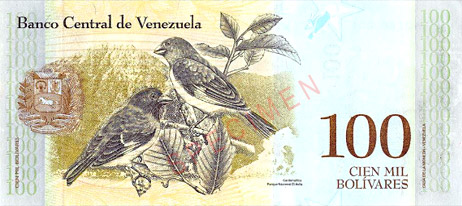
Currency code – VES (Old VEF).
Venezuelan Sovereign Bolívar rates:
| ₹ 1 | 38,737.09 |
| ₹ 1,000 | 38,737,098.47 |
The cheapest currency in the world is Venezuelan Sovereign Bolívar. It suffered significantly from inflation due to COVID19, so its value became record low in 2020. This currency is also considered the most inflated in the world.
The redenomination of the bolivar was carried out on August 20, 2018. The main reason was the hyperinflation of around 830,000%, which kept increasing day by day.
Before the redenomination, 1 USD was worth ~248,487 VEF.
Old banknotes were replaced with new ones with the rate of 1 new VES to 100,000 old VEF.
A cryptocurrency "Petro" was created by the government to "fight the US dollar". But this only accelerated the hyperinflation rate, because the government itself determines the dollar exchange rate at their whim.
#2 – Iranian Rial (~229,500 IRR/USD)
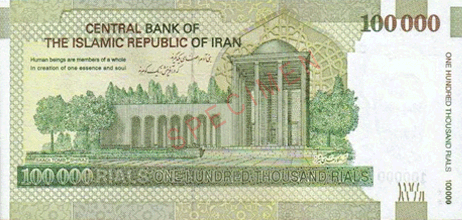
Currency code – IRR.
Iranian rial rates:
1 USD = ~229,500 IRR (US dollar to Iranian rial – black market rate).
1 USD = 42,105.00 (US dollar to Iranian rial – official rate).
1 EUR = ~277,500 IRR (Euro to Iranian rial – black market rate).
1 EUR = 50,999.26 (Euro to Iranian rial).
The second-cheapest currency in the world is the Iranian Rial. Its devaluation started in 1979 after the Islamic Revolution when many businesses left the country because of the uncertain situation. Then came the Iran-Iraq War, and the economic sanctions because of the country’s nuclear program. The Iranian government also restricted access to foreign currency for their citizens, which led to the significant black market lift. All of this damaged economics and devalued the currency almost by 400%.
In 2015, the Iranian government agreed to sign the nuclear agreement with the U.S., France, UK, China, Russia, and Germany for the sanctions mitigation. It improved the situation and stabilized the local currency.
However, in 2018 the U.S. claimed that Iran proceeds its nuclear program. The sanctions were sharpened, restricting the country's access to the world commodity markets. Iran could no longer export its petroleum, which brought about 69% of income annually. It created a critical deficit in its national budget. The sanctions also covered other industries, including petrochemistry and metallurgy.
By May 2020, Iran faced galloping inflation, and its currency was devalued by 600%. That is why the government decided to change Rial to Toman and slash four zeroes from its face value, i.e., 10,000 old Rials will convert to 1 Toman.
#3 – Vietnamese Dong (23,002 VND/USD)
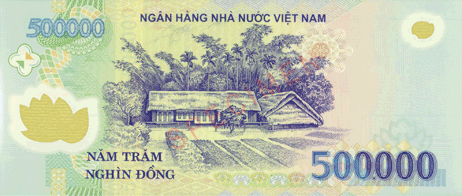
Currency code – VND.
Vietnamese Dong rates:
1 USD = 23,065.00 (US dollar to Vietnamese Dong).
1 EUR = 27,931.25 (Euro to Vietnamese Dong).
The Vietnamese Dong is the currency with the third-lowest value in the world.
Vietnam is still on its hard path from a centralized economy to a market one, and consequently, this country’s currency is very devalued today. At the moment, the Dong takes second place in our "poorest currencies" list.
However, experts insist that the Vietnamese government is going the right way and may soon catch up with its closer Asian neighbors.
#4 – Indonesian Rupiah (14,032 IDR/USD)
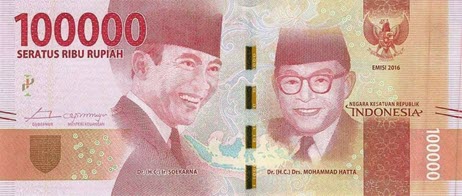
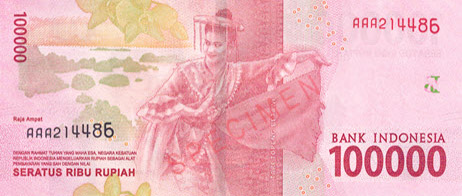
Currency code – IDR.
Indonesian Rupiah rates:
1 USD = 14,201.30 (US dollar to Indonesian Rupiah).
1 EUR = 17,192.04 (Euro to Indonesian Rupiah).
Due to the low value of old-style banknotes, by presidential decree of September 5, 2016, 7 new banknotes were issued in denominations from 1 thousand to 100 thousand rupiahs.
Indonesia is an economically stable and quite developed country in Southeast Asia. However, its money has a very low exchange rate. The country’s regulatory authorities are taking all measures to strengthen the national currency, but all their efforts led only to insignificant changes.
#5 – Uzbek Sum (10,483 UZS/USD)
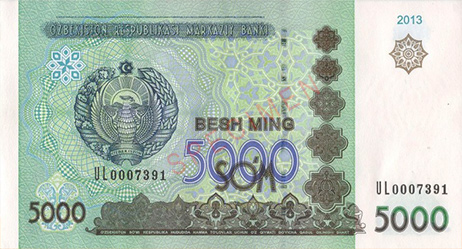
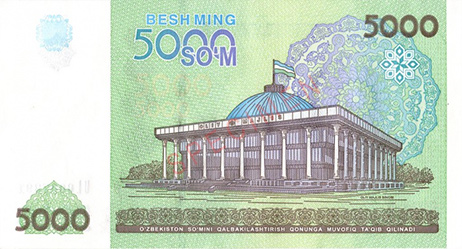
Currency code – UZS.
Uzbek Sum rates:
1 USD = 10,515.00 (US dollar to Uzbek Sum).
1 EUR = 12,732.25 (Euro to Uzbek Sum).
The modern Sum was put into circulation with a ratio of 1 Sum equal to 1000 Sum-coupons from July 1, 1994, by Decree of the President of Uzbekistan.
As a result of the liberalization of their monetary policy from September 5, 2017, the exchange rate of the Sum against the US dollar was set at 1 USD = 8,100 UZS, with an estimated range of 8,000-8,150 UZS for 1 US dollar.
#6 – Guinean Franc (10,234 GNF/USD)
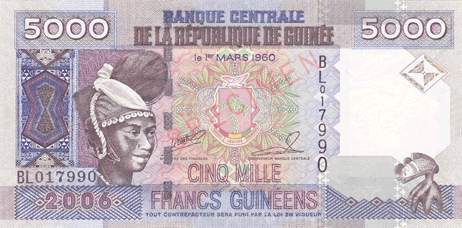
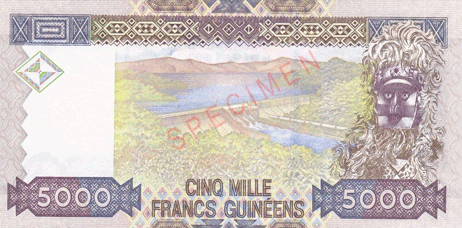
Currency code – GNF.
Guinean Franc rates:
1 USD = 9,925.00 GNF (US dollar to Guinean Franc).
1 EUR = 12,014.50GNF (Euro to Guinean Franc).
A high inflation rate, progressing poverty, and prospering gangsters devalued the currency of Guinea – the African country with one of the most inflated currencies.
Considering its natural gifts like gold, diamonds, and aluminum, this country’s currency should be one of the most valuable.
#7 – Sierra Leonean Leone (10,213 SLL/USD)
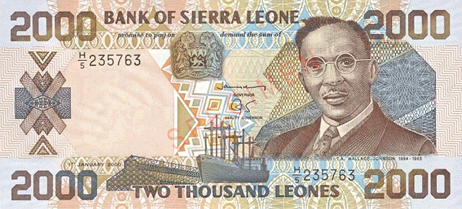
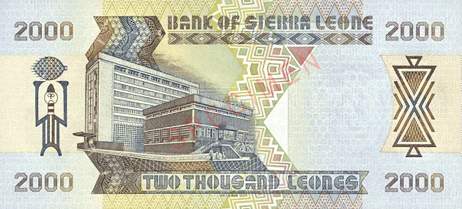
Currency code – SLL.
Sierra Leonean Leone rates:
1 USD = 10,240.00 SLL (US dollar to Sierra Leonean Leone).
1 EUR = 12,398.90 SLL (Euro to Sierra Leonean Leone).
Sierra Leone is a very poor African country, which handled out many serious tests that caused the local money to devalue. Recently, a war took place there, and the deadly Ebola virus is recurrent.
#8 – Lao or Laotian Kip (9,322 LAK/USD)
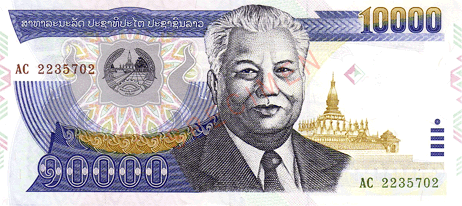
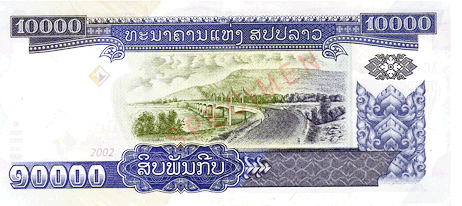
Currency code – LAK.
Lao or Laotian Kip rates:
1 USD = 9,420.00 LAK (US dollar to Lao or Laotian Kip).
1 EUR = 11,403.85 LAK (Euro to Lao or Laotian Kip).
The Lao is the only currency on this list, which did not devalue but was originally issued with a very low rate. Besides, since its issue in 1952, the currency did strengthen against the US Dollar and continues to improve its value.
#9 – Paraguayan Guarani (6,874 PYG/USD)
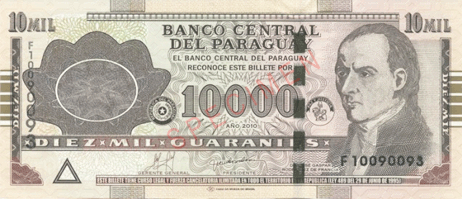
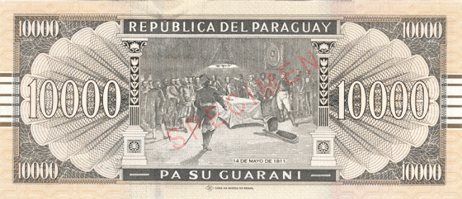
Currency code – PYG.
Paraguayan Guarani rates:
1 USD = 6,785.30 PYG (US dollar to Paraguayan Guarani).
1 EUR = 8,214.28 PYG (Euro to Paraguayan Guarani).
Paraguay is the second poorest South American country. It suffered a disastrous economic downturn, combining inflation, corruption, low education quality, an enormous number of poor people, high unemployment, etc.
Paraguay exports cotton and soybeans, but this is hardly enough to cover its economic needs.
#10 – Cambodian Riel (4,055 KHR/USD)
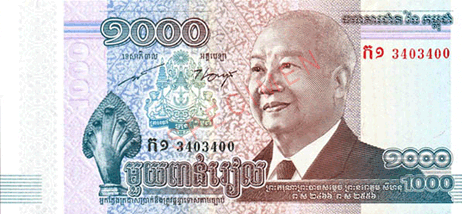
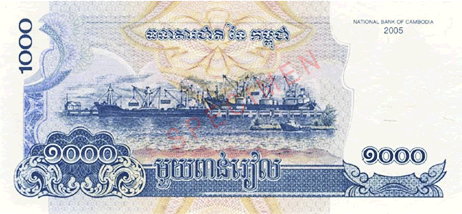
Currency code – KHR.
Cambodian Riel rates:
1 USD = 4,050.00 KHR (US dollar to Cambodian Riel).
1 EUR = 4,905.06 KHR (Euro to Cambodian Riel).
In tenth place the weakest currency in the world is Cambodian Riel. The Cambodian Riel is the currency of this Monarch State in Southeast Asia.
This monetary unit was issued in 1995 to replace the Indochinese Piaster. Originally, the Riel had a low exchange rate and was not popular among locals who had decided to use foreign currencies.
Many Cambodians prefer to use the US dollar for payments now, which causes the local currency to devalue even more.
Out of TOP 10 or redenominated (lowest/cheapest currency in past)
Denomination means a change in the nominal value of banknotes, usually after hyperinflation, to stabilize the currency and simplify calculations.
During a denomination, old banknotes are exchanged for new ones, which, as a rule, have a smaller denomination.
Due to this procedure, some of the currencies have left the above list.
Sao Tomean Dobra
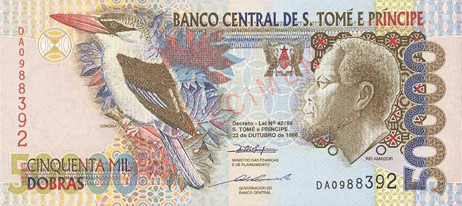
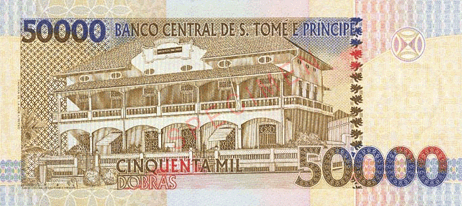
Currency code – STD.
Sao Tomean Dobra rate:
1 USD = 22,511 STD (US dollar to Sao Tomean Dobra before denomination).
| 1 USD = | 20738.07 STD |
1 EUR to STD 24,894.09 STD
| 1 Indian Rupee | 279.882960456 São Tomé and Príncipe Dobra (pre-2018 |
1 INR =282.78753257 STD
The denomination was implemented on the 1st of January 2018. 1 new dobra (STN) equaled 1,000 (STN) of the previous dobras.
Two small islands in West Africa called St. Tome and Principe, are exporters of cacao, coffee, and coconuts. But this is not enough to support the local economy at an appropriate level.
Recently, oil fields were found on St. Tome Island, and, therefore, the Dobra is expected to increase its value soon.
Belarusian Ruble
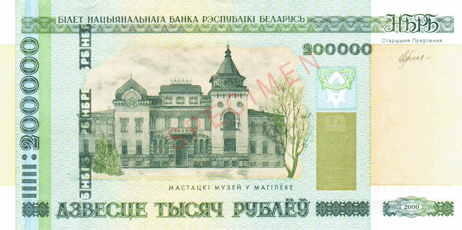
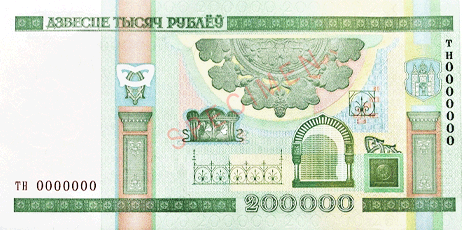
Currency code – BYR.
Belarusian Ruble rate:
1 USD = 24,155 BYR (US dollar to before Belarusian Ruble denomination).
The denomination was implemented on the 1st of July 2016. 1 new (BYN) equaled 10,000 old (BYR).
The Belarusian Republic appeared in 1992, after the USSR’s collapse. It created its national currency, the Belarusian Ruble, which exchange rate remained stable since 2016. High taxes, inflation, corruption, and political restrictions had led to a very low price for this currency on the global market.
Ugandan shilling (3,690 UGX/USD)
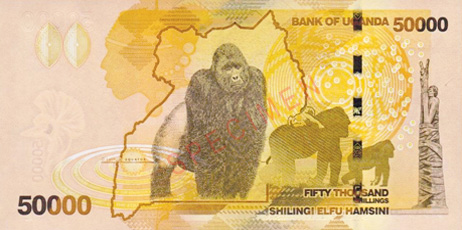
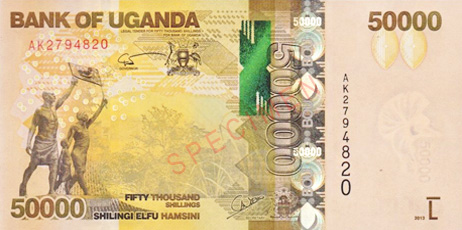
Currency code – UGX.
Ugandan shilling rates:
1 USD = 3,556.44 UGX (US dollar to Ugandan shilling).
1 EUR = 4,310.12 UGX (Euro to Ugandan shilling).
In 1966, the Uganda Shilling first appeared, replacing the East African Shilling. The latter was the official means of payment in Kenya, Uganda, Tanganyika, and Zanzibar.
Banknotes with the following denominations are currently in circulation: 1,000, 2,000, 5,000, 10,000, 20,000, and 50,000.
The Uganda Shilling is a relatively stable currency. Over the past few years, its value hasn’t lost more than 5%.
Why do currencies devalue?
In most cases, a state’s currency devalues because of the economic downturn inside a country. This causes a balance of payments deficit and the inflation rate to grow.
This can be a consequence of different economic downturns such as war actions, GDP decreasing, falling prices of commodities that form a large part of exports, purchasing power falling, credit conditions tightening, political instability inside a country, etc.
Currency devaluation is often connected with badly organized monetary policy and relating to decisions of fiscal controls (Central Banking System
Comments
Post a Comment